
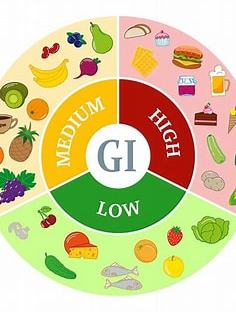
You may have heard about the glycemic index and wondered what it is all about. The glycemic index is a ranking of carbohydrates based on their immediate effect on blood glucose (blood sugar) levels. It compares foods gram for gram of carbohydrate. Carbohydrates that breakdown quickly during digestion have the highest glycemic indexes. The blood glucose response is fast and high. Carbohydrates that break down slowly, releasing glucose gradually into the bloodstream, have low glycemic indexes.
Foods with a high glycemic index convert into sugar very quickly, with negative physical effects. Foods with a low glycemic index turn into sugar gradually, helping maintain your body’s chemical balance. In general, foods with a low index are preferable.
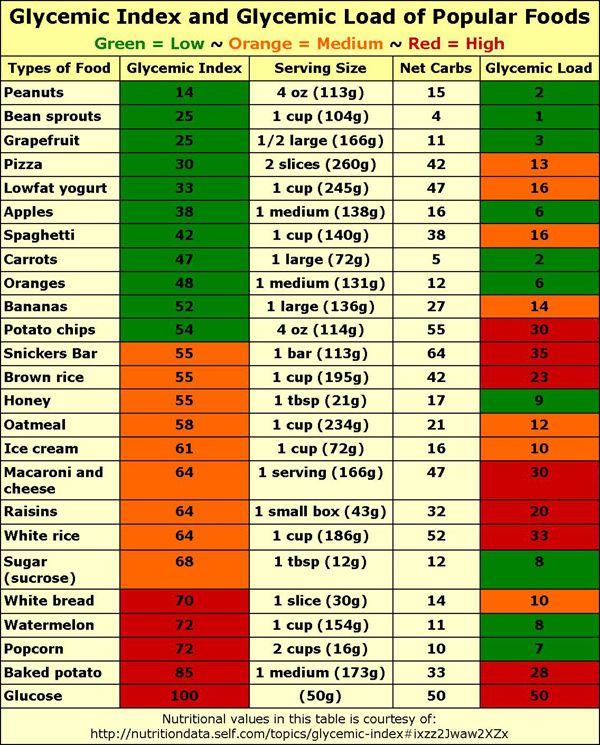
Glycemic Load measures the amount of sugar a food releases in the body. Foods with a low glycemic load usually have a low glycemic index, yet still have a low glycemic load. Other foods have both a high index and a high load. You should avoid high load foods as a regular part of your meal plan.
When you choose carbohydrate foods, check both their glycemic index and glycemic load. Detailed tables with this information are widely available. Use the information below to determine Glycemic Index Level.
Simply eating more fruits and vegetables is not the answer – they must be the right fruits and vegetables. Starchy vegetables such as peas or lentils (200 to 250 calories per cup) are healthy, but they contain more calories than you may want. If you need to eat more to satisfy your hunger, add low glycemic load vegetables. For example, spinach and asparagus are better choices than higher calorie corn and peas. A cup of spinach topped with 1/2 cup of tomato sauce has only about 90 calories, but it gives you nutrients from two color groups.
Why Not Brown and Beige?
When considering which foods to enjoy sparingly, also use color as a guideline. Many brown and beige carbohydrates, like pasta, beans, and potatoes, while healthy, also tend to be high in calories.
Start Today
You can make better eating choices by actually eating foods that have a lower glycemic index. These low GI foods digest slowly and can help with weight management, by making you feel fuller longer leading you to eat less. Incorporating low GI foods into your diet can also support healthy energy levels and moods. Ultimately helping you to avoid blood sugar spikes and overall….Health and Wellness!!!!

 A Daily Dose
Love your blogs. I’ve dealt with the insulin resistance most of my life not knowing it was called that. Diagnosis 2007, however, only told to eat double protein to carb. 2017 diagnosed with diabetes. I’m managing it but tend to eat the same stuff. Your blog is very helpful.
Donna
LikeLiked by 1 person
Thank you Donna for your comment. Glad to hear the blog was helpful! Take care!
LikeLiked by 1 person